

The real question isn't where blue-green algae blooms happen — it's whether you can read the warning signs on the water before your dog goes in. Blue-green algae (cyanobacteria) thrive in warm, sunny, still or slow-moving freshwater, and some of the toxins they produce can affect a dog within 15 minutes of exposure — with severe cases turning fatal within hours to days. The goal isn't to keep your dog out of every natural water source. It's to recognize the warning signs and skip the swim the moment something looks off.
What Most Owners Don't Know About Blue-Green Algae
⚠️ Blue-green algae multiply fastest in still or slow-moving freshwater above 75°F (24°C) in direct sun
⚠️ Poisoning isn't limited to drinking — dogs can ingest toxins by licking algae off their coat after swimming, or through skin contact with an open wound
⚠️ Some toxins can cause symptoms within 15 minutes of exposure, with severe cases fatal within hours to days
✅ Skip any water with blue-green scum, a paint-like film on the surface, or an unusual musty/foul smell — don't let your dog near it or drink from it
✅ Check your state's harmful algal bloom (HAB) advisory map before visiting a new lake or pond — most state environmental or health agencies post real-time bloom reports
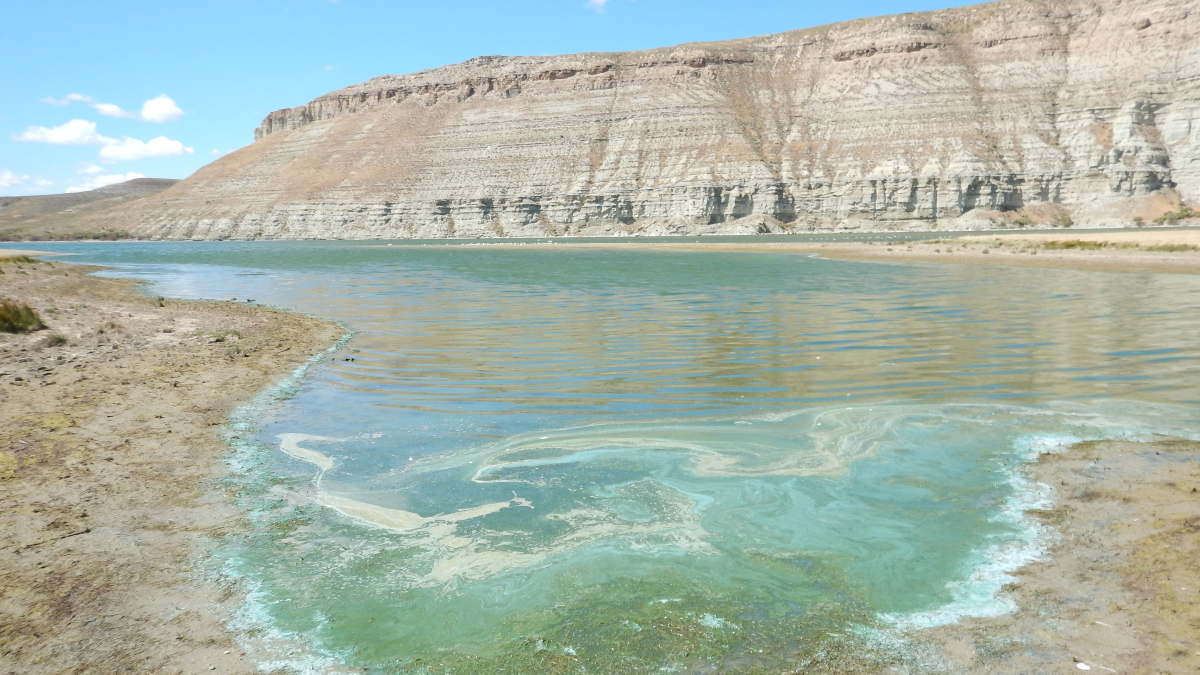
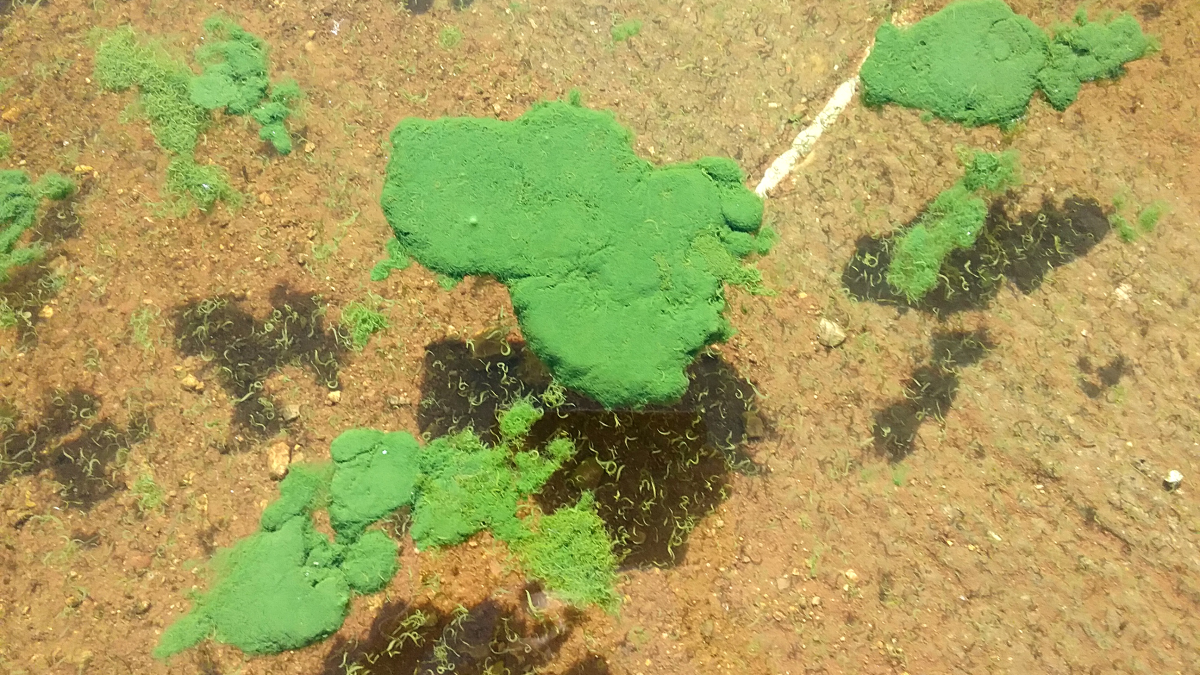
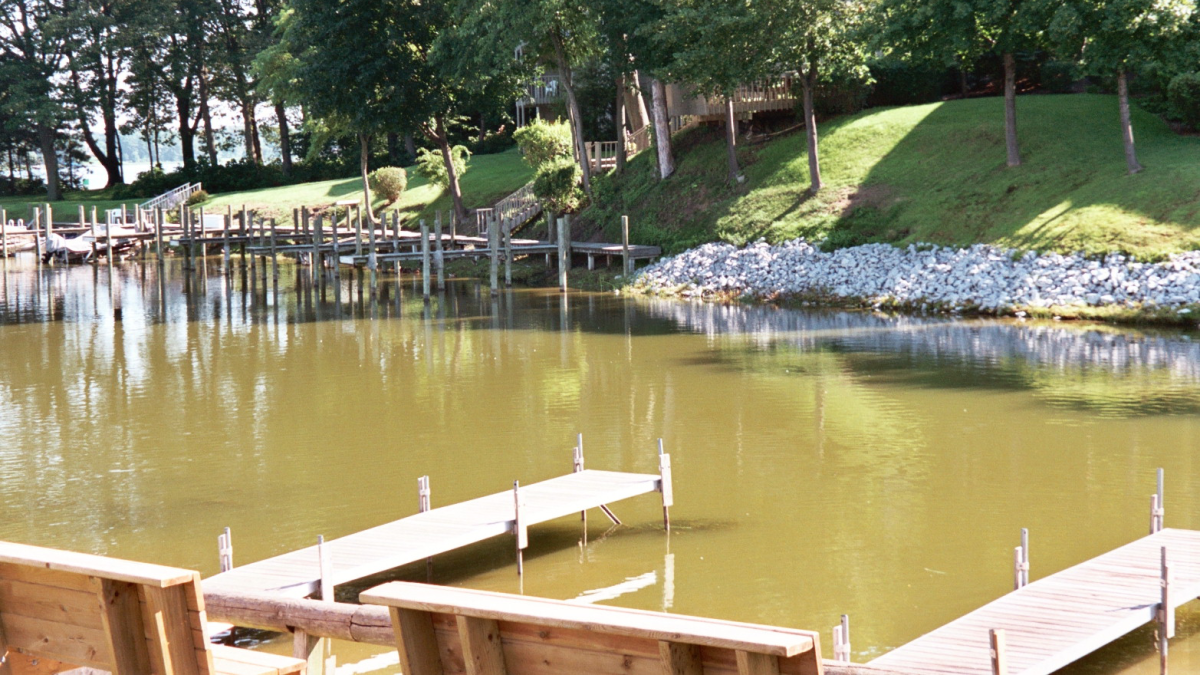
What Does a Bloom Actually Look Like? 3 Reference Photos
Descriptions like "blue-green scum" are hard to picture. These are identification photos from the CDC's Public Health Image Library (PHIL), used here to show what a bloom can look like on the water so you know what to turn around from.
Why Blue-Green Algae Is Especially Dangerous for Dogs
🧪 Risk 1: Microcystin (a liver toxin) — the most common type
Microcystin is the most frequently reported cyanotoxin. It attacks liver cells directly, causing acute liver damage. Once a dog ingests or drinks contaminated water, the toxin accumulates quickly and severe cases can progress to liver failure and death within hours to days.
📌 AAHA: Microcystin poisoning can cause liver failure and death within "hours to days."
⚡ Risk 2: Anatoxin (a neurotoxin) — the fastest-acting type
Anatoxin acts directly on the nervous system, triggering seizures, excessive drooling, and muscle tremors, and can progress to respiratory failure. It's one of the fastest-acting algal toxins — a dog can show acute symptoms shortly after exposure.
📌 AAHA: Both toxins can independently cause shock, respiratory failure, and rapid death, with onset as fast as 15 minutes after exposure.
⚠️ Common Mistakes vs ✅ What To Do Instead
| ⚠️ Common Mistake | ❓ Why It's a Problem | ✅ What To Do Instead |
|---|---|---|
| "The water looks clear, so it must be fine" | Blooms can be patchy, sit below the surface, or be harder to spot on overcast days — a visual check alone isn't foolproof | Check your state's HAB advisory map before you go, then do an on-site visual check; still, stagnant coves and inlets carry more risk than moving water |
| "Only drinking contaminated water causes poisoning" | Licking algae off the coat or contact through a skin wound can also cause poisoning | Rinse your dog's whole body right after swimming — mouth, paws, belly |
| "It's just a small patch of algae, probably fine" | Even a small amount of toxin can trigger a severe reaction, especially in smaller dogs | Treat any blue-green scum or paint-like film as a reason to avoid the entire water body |
| "I can wait and watch before deciding to go to the vet" | Some toxins act within 15 minutes — waiting can be fatal | Go to an emergency vet immediately for vomiting, seizures, drooling, or labored breathing — don't wait and see |
| "Only dogs that drink lake or river water are at risk" | Dogs that wade, swim, or groom themselves afterward can ingest toxins too | Bring clean drinking water so your dog isn't tempted to drink from the lake or river |
The Data
- 📊 Symptoms of blue-green algae poisoning can appear within 15 minutes of exposure (AAHA)
- 📊 Liver damage from microcystin can be fatal within hours to days (AAHA)
- 📊 Blue-green algae multiply fastest above 75°F (24°C) in sunny conditions (ASPCA)
- 📊 Anatoxin can directly trigger seizures, shock, and respiratory failure — one of the fastest-acting algal toxins (AAHA)
Your Pre-Swim Blue-Green Algae Check (4 Steps)
📌 Good to know: many state environmental and health agencies now publish public HAB (harmful algal bloom) advisory maps for lakes and reservoirs, and the EPA maintains a directory of state and tribal HAB programs — worth a quick check before visiting a new water body, especially in mid-to-late summer.
① Pre-trip check
Favor sections with real water flow over still ponds and coves; check your state's HAB advisory map if one is available for the area.
② On-site visual check
Blue-green scum, a paint-like film, or an unusual musty/foul smell — any one of these means skip that water, especially in stagnant coves or pond edges.
③ Bring clean drinking water
A portable water bottle reduces how tempted your dog is to drink from the lake or river out of thirst.
④ Rinse immediately after swimming
Rinse the whole body — mouth, paws, belly — and watch for vomiting, seizures, drooling, or labored breathing over the next 24 hours.
PETT2GO Expert Observation: Getting Ready for Every Outdoor Adventure
On outdoor trips to lakes and slow-moving rivers, we've noticed dogs often start self-grooming within minutes of getting out of the water — which is exactly when algae residue on the coat is most likely to get licked off, and exactly the moment most owners aren't watching for. Blue-green algae risk can largely be managed through decisions made before the swim, which is the core of PETT2GO's Outdoor Decision Knowledge: not limiting outdoor exploration, but giving owners the information to make the right call before heading out. After swimming, a breathable, quick-dry layer helps your dog's body temperature stabilize faster and makes it easier for you to towel off and change your dog before self-grooming starts.

Faster Recovery After a Swim|PETT2GO Ultralight Windbreaker
A breathable, quick-dry fabric helps your dog's body temperature stabilize after swimming, and makes it easy to towel off and change them anytime. The Run-Free Cut™ doesn't restrict natural movement.
View Recommended Gear →FAQ
Q1: Is all blue-green algae toxic?
Not necessarily — but toxic and non-toxic strains are nearly impossible to tell apart by eye. The safest rule: treat any blue-green scum, paint-like film, or unusual odor on the water as a risk, and don't try to judge toxicity yourself.
Q2: My dog just drank water that might be contaminated — should I induce vomiting right away?
No — don't induce vomiting on your own. Rinse your dog's mouth and body with clean water immediately, then contact your vet or an animal poison control hotline right away and let a professional guide next steps. Inducing vomiting yourself can delay proper treatment or cause additional harm.
Q3: Is there an antidote for blue-green algae poisoning?
There's no specific antidote. Treatment is supportive — vet-directed induced vomiting, activated charcoal, IV fluids, and liver support. That's why prevention matters so much more than treatment: the earlier it's caught, the better the odds.
Q4: What season and type of water carries the highest risk?
Risk peaks above 75°F (24°C) in sunny conditions, typically summer through early fall. Still or slow-moving freshwater — ponds, lakes, and slow sections of rivers — carries more risk than fast-moving streams or ocean water.
Q5: How soon do symptoms show up, and what should I watch for?
Symptoms can appear within 15 minutes of exposure: vomiting, diarrhea, excessive drooling, muscle tremors, seizures, labored breathing, lethargy, or disorientation. If you suspect exposure and see any of these signs, go to the vet immediately — don't wait to see if it passes.
Related Reading
- Can Dogs Swim in Lakes or Rivers This Summer? A Complete Water Safety Guide
- Leptospirosis in Dogs: The Hidden Risk in Every Rain Puddle — Prevention Guide
- The Subtle Signs of Dog Heatstroke You Might Be Missing
Share Your Dog's Outdoor Adventure 🐾
Tag your photos with #PETT2GOAdventure —
your story could be featured on our blog or social channels!
This article combines veterinary and toxicology research and is for informational purposes only — it is not a substitute for professional veterinary diagnosis. If you suspect blue-green algae exposure or poisoning, go to an emergency vet immediately.